PM announces a High Level Task Force on MSME Sector
New Delhi, Source: PIB
|
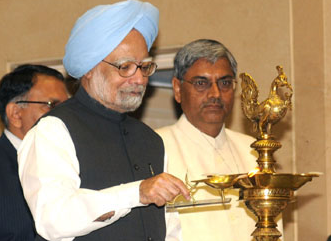
The Prime Minister, Dr. Manmohan Singh lighting the lamp to inaugurate the National Awards Presentation function to Micro, Small & Medium Enterprises, in New Delhi on August 28, 2009. |
The Prime Minister, Dr. Manmohan Singh met representatives of the Micro, Small and Medium Enterprises sector including representatives from All India Confederation of Small & Micro Industries Associations, Federation of Indian Micro and Small & Medium Enterprises, Federation of Association of Small Industries of India, Jharkhand Small and Tiny Industries Association, Tamil Nadu Small & Tiny Industries Association, and Laghu Udyog Bharati.
Shri Dinsha Patel, Minister for MSME, Shri Dinesh Rai, Secretary MSME, and Shri Madhav Lal Additional Secretary & Development Commissioner, MSME were present on this occasion. Shri Ashok Chawla, Finance Secretary was also present. Several important issues were highlighted by the representatives of the MSME association including shortage of credit, need for a focused procurement policy, prompt payment of MSME dues, additional finances from SIDBI, simplification of labour laws to prevent inspector raj, formulation of a one-time settlement policy to strengthen the MSME industries and remove bottlenecks in their development.
Prime Minister Dr. Manmohan Singh shared their concerns and assured the representatives that Government is committed to provide a fillip to this very important segment of the economy. He said that it will be ensured that over a period of time, flow of credit will increase commensurate with the financial needs of the sector. He announced the setting up of a high-level Task Force to reflect on the issues raised by the associations and formulate an agenda for action within a period of three months after deliberations with all stakeholders. |
US fund houses launch five India-specific ETFs
Mumbai, Source: Economic Times
|
 |
American fund houses have launched five more India-specific exchange-traded funds (ETFs) to tap the growth potential of Asia’s third-largest economy that defied the global recession to post an impressive growth rate of 6.7% last financial year.
These funds are BGI S&P India Nifty 50, Direxion India Bull 3x Shares, Direxion India Bear 3x Shares, SPDR S&P India and WisdomTree India Total Dividend. The fund houses have filed their papers with the Securities Exchange Commission (SEC), said a person familiar with the matter, requesting anonymity.
ETFs are open-ended funds that are designed to track specific indices and trade just like any other stock. They are priced continuously and can be acquired by placing an order with a stock broker during trading hours.
Direxion Shares and Direxion Funds, managed by Rafferty Asset Management, offer leveraged index funds that buy more shares than you can with cash, ETFs and alternative-class fund products for investment advisors and sophisticated investors who seek to effectively manage risk and return in both bull and bear markets.
SPDR ETF, managed by the Boston-based SSgA Funds Management, are index funds that track the S&P 500 Index. Barclays Global Investors or BGI has filed papers for a new ETF linked to the S&P India Nifty Index.
Currently, there are just two India ETFs, from PowerShares and WisdomTree. However, many other providers are looking to capitalise on the country’s growth. As on July 30, WisdomTree India Earnings (EPI) was up 63.7% year-to-date, while PowerShares India (PIN) was up 52.7% year-to-date.
The two India ETFs have more than $560 million in assets. As one of the few economies that grew in a year that saw most of the world in recession, India has a growing acceptance among global investors, said Ashu Suyash, India head of Fidelity International.
“A possible reason for the surge in ETFs investing in India is that risk appetite has returned sufficiently for investors to look at emerging markets again... As allocations grow, investors will begin to look for the alpha and follow a more actively-managed investment strategy,” she said. |
MAJOR INITIATIVE FOR GREENING OF INDUSTRY
|
 Within a broader cooperation programme, the United Nations Industrial Development Organisation (UNIDO) is launching new industrial projects totaling nearly US $ 9 million to benefit industry in India. Agreements on this were signed earlier this month (on 7 August 2009) in Vienna by the Secretary of the Department of Industrial Policy and Promotion (DIPP), Shri Ajay Shankar and UNIDO Director-General Dr. Kandeh K. Yumkella. Within a broader cooperation programme, the United Nations Industrial Development Organisation (UNIDO) is launching new industrial projects totaling nearly US $ 9 million to benefit industry in India. Agreements on this were signed earlier this month (on 7 August 2009) in Vienna by the Secretary of the Department of Industrial Policy and Promotion (DIPP), Shri Ajay Shankar and UNIDO Director-General Dr. Kandeh K. Yumkella.
DIPP has conceptualized an Integrated Cluster Development Programme (ICDP) wherein clusters which received infrastructure interventions under its prestigious Industrial Infrastructure Upgradation Scheme (IIUS) were targeted for Technological Interventions through Technical Cooperation services of UNIDO. The clusters selected are Auto-Component at Pithampura (Madhya Pradesh), Chennai (Tamil Nadu) and Pune (Maharashtra); Machine Tools at Bangalore (Karnataka); Foundry at Belgaum (Karnataka) and Coimbatore (Tamil Nadu); Chemicals at Ankhleswar (Gujarat) and Leather at Kanpur (Utter Pradesh).
A US $ 5.9 million Integrated Cluster Development Programme for India will focus on technology, management, skill development and the environment. It will be implemented by 2014 at sites in Pithampura, Chennai, Pune, Ankhleswar, Kanpur and New Delhi, matching the specific needs of each industrial location.
The Programme will offer turnkey solutions to each of the identified clusters to help them address technology, quality or environmental constraints, encompassing a comprehensive package of services – ranging from energy efficiency and water conservation to cleaner production and lean manufacturing. “Lowering the consumption of energy, raw materials and water in industry; reducing the waste and pollution intensity of enterprises; and improving the productivity of industries, leading to enhanced competitiveness – these are the essential underpinnings of the Integrated Cluster Development Programme. Through this flagship programme, the project will avail UNIDO’s expertise in the key areas to achieve the vision of a Green Industry”.
“The 2009-2014 Integrated Cluster Development Programme for India will help tackle poverty issues and contribute to environmental sustainability”. The cluster programme combines projects that will help improve resource productivity and environmental performance of small and medium enterprises (SMEs) in particular in automotive components, leather and chemical sectors. They will focus on enhanced market access for small and medium sized automotive component manufacturers in Indian auto-clusters.
|
|
Gujarat to Kerala container rail service commences
New Delhi, Source: IBEF
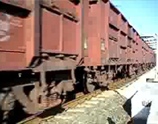
In response to a growing demand for tiles in the Malabar region, a container train service has opened between the City of Morbi, in Gujarat and the town of Kannur, in Kerala. The service is run by Vikram Logistic and Maritime Services (VLMS) which is a joint venture between Indian Railways and Gujarat Pipavav Port. It plans to increase services between Gujarat and Kerala in near future to move textiles, medicines, food grains and other goods.
|
States agree on dual GST format
New Delhi, Source: IBEF
The Empowered Group of State Finance Ministers on GST agreed to have a system of two basic rates, comprising of a standard rate and a lower one for essential commodities in the proposed Goods and Services Tax (GST), that is scheduled to be implemented on 1 April 2010. There will also be a list of exempted items as well as a special rate for precious metals. The new GST would replace the Excise duty and Service tax presently levied and collected by the Union Govtand the VAT and the local taxes at the level of State Govt. The empowered group also decided to set up a Joint Working Group (JWG) to work out within two months a frame work of the necessary amendments to the Constitution of India for GST implementation and to draft a model GST legislation for the central and the state governments. JWG will comprise of officials from the central as well as the state governments working in the areas relating to finance and taxation. |
Tourism Ministry issues guidelines for Caravan Heliport and Wellness Tourism
New Delhi, Source: IBEF
Ministry of Tourism of Government of India issued guideless for development and promotion of Caravan Heliport and Wellness Tourism as part of the 100 day agenda of the UPA government. The guideline seeks to popularise Caravans and develop Caravan parks, which require approval by Ministry, in the PPP mode. These parks would have the required facilities for parking, tourist amenities as well as for the safety and security of the tourists and the Caravans. Union Government also decided to extend financial assistance to state governments for construction of heliport with the intention of promoting tourist destinations in hilly and remote areas of the country. Two projects for construction of heliports at Mangan and Geetang Khola in Sikkim was sanctioned under this new initiative.
The guidelines on Wellness Tourism seeks to promote the vast potential that the traditional Indian systems of medicine (Ayurveda, Unani, Siddha, Yoga etc) enjoy by laying down criteria for accreditation of wellness centres. This criteria would be developed by Department of AYUSH in partnership with National Accreditation Board for Hospitals and the centres so accredited would be considered for undertaking tourism promotional activities abroad. |
Indian railways moved out of service tax net
Finance Ministry exempted transport of goods by Indian railways from levy of service tax. A decision to impose service tax on goods transported by railways was announced by the Finance minister in his budget speech. Though Railways had protested against this decision, Finance Ministry had held firm and had exempted certain essential items transported by a rail from service tax to reduce the impact of this levy on the common man. However, finally Finance Ministry bowed to the sustained pressure from Ministry of Railways and decided to withdraw the levy. However, transport of goods in container by rail would continue to attract service tax and Concor and other container rail companies will continue to pay service tax. |
|