Kotak ties up with Russia's top I-bank
Mumbai
Kotak Investment Banking, a subsidiary of Kotak Mahindra Bank, has entered into an exclusive alliance with Renaissance Capital, Russia’s biggest home-grown investment bank.
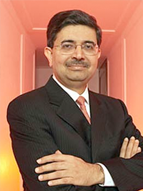
Uday Kotak, executive vice-chairman and managing director of Kotak Mahindra Bank |
The alliance aimed to use Renaissance’s franchise in Russia, Africa and the former Soviet Union and Kotak’s Indian experience to help big companies from those countries buy into each other’s markets, the two companies said.
This is Kotak’s second such tie-up since it parted ways with Goldman Sachs three years ago. Moscow-based Renaissance Capital, backed by Russian billionaire Mikhail Prokhorov, specialises in resources industries, particularly mining and oil & gas. Uday Kotak, executive vice-chairman and managing director of Kotak Mahindra Bank, said, “To meet consumption demand, India will have to find ways to have greater access to resources and the place for these resources is CIS (Commonwealth of Independent States) and Africa. So, we have tied up with Renaissance Capital, which has a deep presence in these markets.”
The alliance is a co-operation agreement and does not involve equity.
Kotak Mahindra had ended its 10-year-old alliance with Goldman Sachs in 2006 by buying out the latter’s 25 per cent stakes in their investment banking and investment joint ventures. IN February this year, it announced a tie-up with Japanese investment bank GCA Savvian Corporation to advise on cross-border M&As between the two countries.
The Mumbai-based bank is on the lookout for similar international partnerships and is in talks with an Australian firm focused on mining and minerals, according to Falguni Nayar, managing director of Kotak Mahindra Capital. It is also working with KBC Financial Products in the area of convertible bonds. Kotak said the agreement on cross-border M&A advisory on India-Russia and India-Africa corridors was important as Indian companies evaluate their growth and expansion strategies.
Kotak anticipates strong interest in strategic M&A opportunities in these two markets. Stephen Jennings, chief executive of Renaissance Group, said the company anticipated unprecedented cross-border deal flow among emerging markets. In the resources sector, Indian companies are actively seeking to acquire energy and mining assets in the CIS and Africa. |
India's manufacturing sector on road to recovery, says CII survey
India’s manufacturing sector is showing firm indications of revival and was on a higher growth trajectory in the first half (H1) of the current financial year (2009-10), according to a Confederation of Indian Industry (CII) survey.
The survey compared results for April-September 2009 with April-September 2008. It showed that growth rates in the majority of sectors had positive trends in the first half of 2009-10, compared with the corresponding period in 2008-09. There is also a significant shift in the trends, from the negative and moderate growth category to the high and excellent growth one, as 12 per cent of the sectors registered such a shift in H1 2009-10 compared with all of 2008-09.
“This improvement in manufacturing growth has been a result of the stimulus packages announced by the government,” said Chandrajit Banerji, director-general, CII. The buoyant manufacturing growth in the first half is led by a rise in production of basic goods, intermediate goods and consumer durables. Around 10 per cent of the sectors surveyed registered an excellent growth rate (above 20 per cent) in H1 2009-10, compared with only seven per cent of the sectors in the corresponding period last year. The share of the sectors registering moderate growth declined to 35.8 per cent in H1 this year against 42.6 per cent last year.
Also, the second quarter had witnessed substantial decline in the share of sectors recording a negative growth rate, to 19.4 per cent from 40 per cent in the first quarter of the current year. Sectors showing a greater growth rate increased to 35.5 per cent of the total in July–September 2009 against 22.7 per cent in April-June 2009. Sectors registering an excellent growth rate of above 20 per cent include nitrogen gas, phosphate, motor starters, industrial gasses, and construction equipment. A high 10-20 per cent growth rate was registered by pumps, light commercial vehicles, cars, scooters and other consumer durables like electronics and home appliances.
On the export side, the situation is still one of concern. Twenty of 29 sectors have reported negative growth rates in the first half of 2009-10. With the exception of soda ash, machine tools, cars, multipurpose vehicles and biscuits, all other sectors reported negative and moderate growth rates. |
Ruia Group acquires 60% stake in Henniges Automotive Grefrath
Kolkata-based Pawan Kumar Ruia Group, which owns Dunlop India, today said that it had acquired a 60 per cent stake in Germany's Henniges Automotive Grefrath GmbH, a supplier of automotive sealing systems to leading carmakers, for an undisclosed sum.
The German firm, which had a turnover of Euro 83.5 million last year and counts Daimler, BMW, Audi and Volkswagen amongst its clients, is the group's largest overseas buy, so far.
Last year, the Ruia Group had acquired UK's Schlegel Automotive Europe, also an automotive sealing systems company. The acquisition was undertaken by a Mauritius-based special purpose vehicle (SPV) of the Ruia group, Wealth Sea, which bought a 60 per cent share in Draftex, a German-registered company. Draftex, in turn, purchased the assets of Henniges Automotive Grefrath GmbH.
“This acquisition will ensure synergy with Schlegel Automotive and position the group as a global leader in the automotive sealing systems space.
Although there will be technology sharing between the two companies, they will remain separate,” the group's chairman Pawan K Ruia said today.
Hit by slowdown, Henniges Automotive was sick for a sustained period and eventually went for liquidation last year. Subsequently, it has undergone substantial restructuring, including the trimming of its workforce by over 50 per cent, before being acquired by Draftex.
“After the heavy restructuring, we are very competitive now.
Daimler, BMW, Audi and Volkswagen have already given us advances against orders which will be readjusted with future sales. Although we are now only manufacturing for high-end cars, we will explore opportunities to sell to the mass market,” Draftex director Juregen Hein said. Hein 23 per cent equity of Henniges Automotive through his stake in Draftex, while the remaining 15 per cent is with Wolf Von Der Fecht, the administrator of the component maker. |
|
Tokyo's Eisai injects Rs 250 cr for pharma plant in Vizag
Tokyo-based Eisai Co Ltd, focusing on R&D, manufacturing and marketing of chemicals, food additives along with machinery and equipment for pharmaceutical production, has invested Rs 250 crore for setting up a pharma manufacturing plant in Vizag. A wholly-owned subsidiary of Eisai, this facility is called Eisai Pharmaceutical Technology and Manufacturing Ltd. It also houses the Eisai Knowledge Centre.
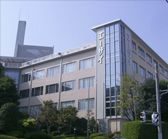
The manufacturing facility at Vizag is in the Pharmacity Special Economic Zone and is spread over 50 acres with over 80 employees in the first phase. Over a period of time, the company would be looking at setting up an R&D centre in India or Singapore which would focusprimarily on neglected diseases such as malaria, HIV, TB, among others. “We are looking at both combination of basic R&D and reverse engineering process. Besides, we will have a data management global centre for clinical research,’’ Kenji Toda, senior vice-president, government relations, also the chairman of International Affairs Committee of Japan Pharmaceutical Manufacturers Association, told FE. The proposed research centre would focus on process research, combination of drug development, among otherd. “We are also in talks with some of the research institutes in India and working to develop drugs in a cost-effective manner,’’ Toda explained.
According to Toda, Vizag will be Eisai’s second global API supply site after the Kashima plant in Japan which supplies APIs to all countries. The facility will house drug substance and drug product manufacturing.“Production in Vizag will allow Eisai to offer affordable prices in developing nations and cope with changes in the business environment,’’ he said. In the process, the company aims to make the Vizag site supply the most cost-effective medicines to the world. Currently, the capacity for API production is 30 tonne which can be increased to 60 tonne per annum and drug production capacity increased two-fold from one billion to two billion per annum.
Some of the products to be manufactured in this facility include Aricept, a drug for the treatment of Alzheimer’s disease and Aciphex/Parit, a proton pump inhibitor, both Eisai’s flagship products, in the initial phase. Other products in its second phase include Epry, a muscle relaxant, Zonigran for vertigo and methylcobal for neuropathy disorders.
“Outsourcing of API intermediates as a part of cost reduction strategy, clinical development and trials, data management, are the strategic opportunities we can tap in the country,’’ he said. The company’s future expansion from the country would include initial production for the Indian markets besides export to Japan, US, and European countries.
|
ADB approves $200m for Assam power sector
The Asian Development Bank (ADB) has approved a financial assistance for $200 million under the Assam Power Sector Enhancement Investment Programme. Union Finance Minister Pranab Mukherjee said this in a letter to Assam Chief Minister Tarun Gogoi. Mukherjee pointed out that apart from the loan, ADB will provide a grant of $ 1 million for capacity development of the power sector utilities in the State. The project has some innovative features like franchisee-based distribution, off grid electrification with renewable energy, reduction in CHG emissions through efficiency gains. Mukherjee said these innovative features were appreciated during consideration of the proposal by the board of directors of ADB. The finance minister hoped the State government under Gogoi would spare no efforts in implementing the project in time so that the desired benefits were fully realised. |
|


