 |
|
Land Of Monuments , Museums, Art and Culture
MORE
[+] |
 |
|
Bharatanatyam dance performance held
MORE [+] |
|
| |
| 03. TRADE AND INVESTMENT |
| INDIA'S FOREIGN TRADE DATA: JUNE 2010 |
| Source : Business Standard |
India’s Exports during June, 2010 were valued at US $ 17745 million (Rs.82632 crore) which was 30.4 per cent higher in dollar terms (27.1 per cent higher in Rupee terms) than the level of US $ 13606 million (Rs.64996 crore) during June, 2009. Cumulative value of exports for the period April-June 2010 was US $ 50777 million (Rs231743 crore) as against US $ 38396 million (Rs.187218 crore) registering a growth of 32.2 per cent in Dollar terms and 23.8 per cent in Rupee terms over the same period last year.
India’s Imports during June, 2010 were valued at US $ 28299 million (Rs.131781 crore) representing a growth of 23.0 per cent in dollar terms (19.9 per cent in Rupee terms) over the level of imports valued at US $ 23013 million (Rs.109937 crore) in June, 2009. Cumulative value of imports for the period April-June, 2010 was US $ 83044 million (Rs.378992 crore) as against US $ 61871 million (Rs.301439 crore) registering a growth of 34.2 per cent in Dollar terms and 25.7 per cent in Rupee terms over the same period last year.
Oil imports during June, 2010 were valued at US $ 8354 million which was 26.5 per cent higher than oil imports valued at US $ 6601 million in the corresponding period last year. Oil imports during April-June, 2010 were valued at US$ 25276 million which was 51.8 per cent higher than the oil imports of US $ 16647 million in the corresponding period last year.
Non-oil imports during June, 2010 were estimated at US $ 19946 million which was 21.5 per cent higher than non-oil imports of US $ 16412 million in June, 2009. Non-oil imports during April - June, 2010 were valued at US$ 57768 million which was 27.7 per cent higher than the level of such imports valued at US$ 45224 million in April - June, 2009.
The trade deficit for April - June, 2010 was estimated at US $ 32267 million which was higher than the deficit of US $ 23475 million during April -June, 2009. |
|
| India is top exporter of petro products in Asia
|
| Source : The Hindu Business Line |
Mumbai: India is now the largest petroleum products exporter in Asia, surpassing South Korea.
According to the data compiled by oil and metal information provider Platts, India's gross exports currently average 1 million barrels a day, inching past South Korea which exports 0.9 million barrels a day.
 With the commissioning of a new refinery by Reliance Industries at Jamnagar and Essar Oil increasing refinery output at Vadinar, India overtook South Korea by mid-2009 and has since then consistently maintained the lead position. With the commissioning of a new refinery by Reliance Industries at Jamnagar and Essar Oil increasing refinery output at Vadinar, India overtook South Korea by mid-2009 and has since then consistently maintained the lead position.
India's average petroleum products export grew from 0.77 million barrels a day in January 2009 to one million barrels a day in August 2009. In the current year, the average oil products export from India stands at 1.07 million while South Korea exports average 0.88 million.
In fact, India's refining capacity at 3.69 million barrels a day is the third largest in Asia after China and Japan, which have a refining capacity of 9.6 million bpd and 4.64 bpd respectively. Platts' compilation is based on the data from individual countries.
“Both Reliance Industries' Jamnagar and Essar's Vadinar refineries contribute more than 90 per cent of the petroleum products exports while the rest is by public sector oil companies,” said Ms Vandana Hari, Asia Editorial Director, Platts.
“Public sector companies, which are obliged to serve the domestic market adding refinery capacity, will help private players to free up more capacity for exports,” she said.
According to her, petroleum products exports from India holds great potential as both RIL and Essar have high complexity refineries which make products that meet Euro IV and Euro V standards. Europe, the US and Africa are identified major markets for Indian refiners. |
| Growing demand |
The growing overseas demand for petroleum products from India is reflected in export volume growth of Reliance and Essar. RIL exported 32.8 million tonnes of refined products last fiscal against about 22.6 million tonnes for the previous period, fetching revenue of $20.9 billion (Rs 1,10,176 crore).
RIL's export volume grew by 45 per cent last fiscal while it grew 82 per cent last quarter to 9.5 million tonnes.
The new Reliance Petroleum refinery in the Special Economic Zone (SEZ) at Jamnagar, which is designed to be export-oriented, is estimated to be exporting more than 80 per cent of its total output.
Essar's Vadinar refinery has a total current throughput capacity of 14 million tonnes a year. Of the total production, about 30 per cent is exported while more than sixty per cent of refined products are sold to public sector oil marketing companies.
|
|
| Consumer Affairs Ministry says yes to 49% FDI in multi-brand retail |
| Source : The Hindu Business Line |
New Delhi: The Consumer Affairs Ministry has given the green signal to allow 49 per cent FDI in multi-brand retail. It has written a letter to this effect to the Commerce Ministry.
India currently allows 100 per cent FDI in cash-and-carry operation and 51 per cent in single-brand retailing. Foreign investors are barred from investing in multi-brand retail.
Additionally, the Ministry also sought that a model law be first put in place at the State-level to protect mom-and-pop stores from the impact of the ‘Big Boys' of retail.
“Multi-brand retail should be permitted with a cap of 49 per cent… A significant chunk of investments should be spent on back-end infrastructure, besides logistics and agro-processing,” the Consumer Affairs Ministry had said in response to the discussion paper floated by the Department of Industrial Policy and Promotion in June on allowing 100 per cent FDI in multi-brand retail.
A senior government official said the Consumer Affairs Ministry has sought the enactment of the National Shopping Mall Regulation Act to regulate the fiscal and social aspects of the retail sector, besides allowing mom-and-pop stores to become franchises of multi-brand retailers.
“This will help grow not just the business but also in setting up back-end infrastructure which is much needed for the evolution of the retail sector,” the official added.
According to an ICRIER study, commissioned by the Commerce Ministry in 2007, “the retail business, in India, is estimated to grow at 13 per cent each year from $322 billion in 2006-07 to $590 billion in 2011-12. The unorganised retail sector is expected to grow at about 10 per cent a year from $309 billion 2006-07 to $496 billion in 2011-12.” |
| DEPB scheme |
The exporter-friendly DEPB, designed to neutralise import duty on inputs, has been extended by another six months up to June 2011. The interest subvention of 2 per cent for pre-shipment credit for export sectors — handlooms, handicraft, carpet and micro, small and medium enterprises — which has been allowed till March 31, 2011, has now been extended to a number of additional products pertaining to sectors like engineering, leather, textiles and jute.
Exporters availing themselves of advance authorisation for annual requirement of imports would also be exempt from payment of anti-dumping and safeguard duty.
|
| Services Exports |
For the $93-billion services exports, the scrips issued under Served From India Scheme can now be used for payment of duty on import of vehicles in the nature of professional equipment. For agri and plantation segment, instant tea and CSNL Cardinol are included for benefits under at 5 per cent of f.o.b. value of exports.
Towns of Export Excellence
Over and above the extant 21 Towns of Export Excellence, there would be three more for handicrafts in Barmer (Rajasthan), for textiles at Bhiwandi (Maharashtra) and for leather products at Agra (U.P.).
|
| India is the favoured offshoring location for British firms |
| Source : The Hindu Business Line |
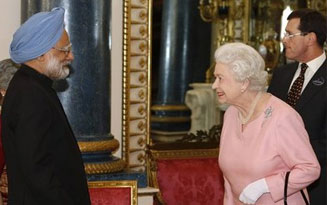
London: India is the overwhelming favourite destination for offshoring by British companies, according to a joint study published by the Chartered Institute of Personnel and Development and KPMG.
In their annual Labour Market Outlook, the firms found that one in 10 British firms were looking to offshore work outside the UK, and that 65 per cent of those were planning to offshore to India in the 12 months to June 2011. That compares to just 36 per cent to China, and 29 per cent to Eastern Europe.
As expected, the largest chunk of jobs being moved to India and elsewhere is in the IT sector. Four in 10 IT companies plan to relocate jobs to other countries, but other sectors are playing a growing and significant role.
Nineteen per cent of financial, insurance and real estate companies are planning to relocate jobs, representing a significant trend shift, the survey of 598 human resource professionals in the UK found.
“The surprising element in all of this is the wide range of sectors in which jobs – and highly skilled jobs are being moved abroad,” said Mr Gerwyn Davies, public policy adviser to the CIPD.
The figures lend weight to recent fears of a skills shortage in the UK, despite high levels of unemployment, suggesting that firms have no alternative to going abroad to find needed skills.
‘Growing reality'
“The simple truth is that there simply aren't enough qualified people in the UK. This is now a reality and a growing reality,” said Mr Davies.
Back in June, the Office of Budget Responsibility, an independent body set up by the new coalition government, warned that changing demographics in the UK – as a result of falling immigration – could dampen economic growth as a result of a skills shortage.
The CIPD study also points to the potential problems that the government's plans to introduce an immigration cap could have. According to Mr Davies, that a small but significant minority of respondents to the survey said they were considering moving jobs abroad under the proposed system.
“One company that hired linguists from the Far East said that if they were unable to bring them to the UK, they would be unable to carry on with existing operations and would be forced to move jobs to one of the other global centres,” said Mr Davies.
The British coalition government has stuck to the Conservative Party's election pledge of introducing an annual immigration cap that would take net immigration back to 1990s levels of “tens of thousands” rather than “hundreds of thousands” beginning next year.
The government has tried to assuage fears, including during Prime Minister David Cameron's visit to India, through pledges to work closely with firms to ensure they were able to bring the skilled workers they needed into the country.
Still, the fear is that with EU regulations preventing any restriction on workers from the EU, including Eastern Europe, the clampdown will fall overwhelmingly on workers from outside, including India and China.
|
|
Govt announces Rs 1,050-cr sops for exporters
Source : The Hindu Business Line
New Delhi: Government announced export policy support measures and covered labour-intensive segments such as leather, handloom, and handicrafts, and some engineering sectors for both market diversification and technological upgradation. The popular Duty Entitlement Passbook (DEPB) scheme for imported inputs was extended by another six months.
The measures unveiled by the Union Commerce and Industry Minister, Mr Anand Sharma, in the Annual Supplement to the Foreign Trade Policy, include additional benefit of 2 per cent bonus over and above the existing benefits of 5 per cent (3 per cent for focus market scheme and 2 per cent for focus product scheme of f.o.b., or free-on-board, value), for 135 existing products.
The zero duty Export Promotion Capital Goods scheme introduced in August 2009 and valid for two years has been further extended by one more year till March 31, 2012 and would cover new units of paper and paperboard, ceramic products, refractories, glass, plywood, marine products, sports goods and toys and additional engineering products. As status holders contribute substantially to exports, the one per cent Status-Holder Incentive Scheme is extended by one more year to 2011-12. This scheme, to support status holders upgrade technology, was introduced in August 2009 and was valid for two years. It would now cover additional segments such as chemicals and allied products, paper and paperboard, glass and glassware, rubber, plywood, electronic products, sports goods and toys. It also provided for additional flexibility for transferability of duty credit scrips under Vishesh Krishi and Gram Udyog Yojana scheme by allowing transfer of scrip for import of cold chain equipment to units in the Food Park.
For the beleaguered readymade garment industry, the benefits under the Market-Linked Focus Product Scheme provided earlier for six months has been extended up to March 31, 2011 for exports to 27 countries of the European Union.
|
PC reach doubles in 3 years: Intel
Source : Source : Business Standard
New Delhi: PC penetration in India has doubled in the last three years and desirability continues to be on the upswing among the urban population, said a study.
Now, one in every four urban household has a Personal Computer.
The study by Intel and IMRB revealed that PC penetration has increased from 19 per cent to 38 per cent across SEC A, B and C in India over the last three years. The study also said PC desirability is on the rise across all sections, and by over 100 per cent in SEC C.
The study, India Urban Consumer Segment Nationwide Study 2009-2010, was conducted across 82 cities sampling over 19,000 households.
“This is an exciting time for the Indian PC market and our study reiterates the same. We have always believed that the personal computer is a multi-functional device that consumers can use to work, learn and play. Most importantly it helps people to take full advantage of today’s technological advances and prepare for tomorrow’s challenges,” said R Sivakumar, managing director, sales & marketing, Intel South Asia.
“The jump is across user profiles, socio-economic segments as well as town classes,” said Prakash Bagri, director of marketing for Intel South Asia.
The study said more and more first-time buyers are buying notebooks. In 2009 the percentage of non-owners opting for notebooks has doubled to a whopping 31 per cent while those opting for a desktop PC stayed relatively flat at 44 per cent.
|
|
|
| Domestic airlines registered a 17 per cent growth during January-July 2010 |
| Source : IBEF |
New Delhi: India’s domestic airlines witnessed a surge of nearly 500,000 passengers in July 2010 in comparison to the corresponding period in 2009.
It is the 7th consecutive month for the domestic airline industry to report an increase in the passengers flown in comparison with the same period in 2009.
As per the latest data collated by the Directorate-General of Civil Aviation (DGCA), the domestic airlines flew 17.56 million passengers during January-July 2010 as against 14.53 million passengers carried during the same period in 2009, thereby, registering a 17 per cent growth.
MPEDA - Exploring new tie-ups
The Marine Products Export Development Authority (MPEDA) is making efforts to find new markets for Indian marine products. For the purpose, it is participating in the major international seafood trade fairs. Indian marine products are showcased in these trade fairs for their variety and quality with a view to introduce our products to the new traders who visit these fairs and to establish new trade contacts in new markets. MPEDA also regularly mounts trade delegations and official delegations to new regions with the objective of tapping potential for export of our marine products to the countries in those regions. MPEDA publishes list of exporters on its website and passes on the valuable trade enquiries received by it to the exporters in India through trade associations. India exported marine products to 99 countries in 2009-10 as against 91 countries in the year 2006-07. Finding new markets for Indian Products through broadening and deepening our presence in world markets is a continuous and ongoing process and hence no specific target for finding new markets has been fixed for 2010-11.
MPEDA is focusing only on its core area of export promotion of marine products. It is continuously taking several measures to boost exports by implementing a number of schemes which include sea-freight assistance scheme for import of raw material for value addition and re-export, developmental assistance for export of ornamental fish and assistance for technology up gradation for processing of marine products.
Further, MPEDA is regularly disseminating the trade enquiries received to the trade members and facilitating interaction of sellers/buyers through its Trade Promotion Offices in Japan and New York to develop new tie-ups between exporters and buyers.
This information was given by Shri Jyotiraditya M Scindia, Minister of State for Commerce & Industry, in a written reply in the Rajya Sabha |
|
|
|
| |
|
|


