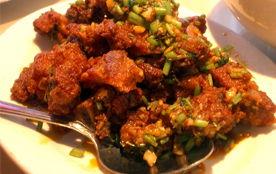
Speaking of spices, let’s debunk the myth of curry powder. This favourite of the Western larder finds no counterpart in Indian kitchens. As curries across the land vary from the lightest broth to eye-wateringly pungent and unctuously creamy, so do their spices.
Derived from the old Tamil kaikaari (gravy), ‘curry’ now embraces saucy dishes of every description. Kashmir alone boasts a spectrum from cool yoghurt-based yakhni to paprika-laden rogan josh. If you’re lucky, you’ll be served a wazawan (multi-course banquet) culminating in legendary gushtaba (pounded meatballs).
Bengal’s estuarine palate roams from simple maach bhaja (fried fish) to delicately seasoned jhol (light stew) and bhaapa (steamed fish), to sharp jhal (mustard-paste marinated), milky malai-kari (with coconut cream), sweetly rich kalia and tangy doi (yoghurt) maach.
As in Bengal, the geography encourages paddy plantations further south, but it is more than steamed rice you mop up curries with – rice and lentil batters are fermented, flavoured, steamed or griddled for the assortment of ‘unleavened rice breads’ counterparts to the Northern wheat-based rotis.
Kerala’s Syrian Christians offer ishtew (in cardamom-flavored coconut milk) with appams (rice pancakes). Try a classic Alleppey fish curry, tart with tamarind or kukum berries. When you tire of seafood, choose spicy meat ‘fry’ (really a drier curry) or pathiri dished up with parottas (pried flatbreads). The vegetarian saddya (meal) with its dazzling array of thoran (dry veggies), olan (beans and gourd in coconut milk), aviyal (coco nutty, tangy), kalan (yoghurt-based), erisseri (lentils amd yam) will not disappoint, accompanied by rasam (peppery tamarind-water) and sambar.
Through Tamilian cuisine is inextricably bound to visions of dosas, idlis, uttapams and vadas, these are mere snacks. Brahmins dish up a blander saapad, aromatic yet divinely easy on the palate. Their Chettiar cousins incorporate in their repertoire just about everything that grows or moves: sun-dried legumes, berries and kalpasi fungi make their way into curries, as do every kind of game – rabbit, quail, pigeon. Their signature dish is Chettinad chicken (with whole peppercorns) Sit down for Mudaliar meal- vazhaipoo vadai (fried banana-blossom rissoles), with perhaps kathirikkai varwal (masala stuffed brinjal in sour gravy), a plethora
of kozhambu (curries) with green masala, tamarind and pepper, and pakoda kurma (dumpling curry).
Goan curries of Portuguese antecedent yield fierier dishes still.
Konkani cuisine often uses the indigenous cashew liquor, feni for marinade. Picking and drying are common techniques (as in the famed prawn balchao, dried Bombay Duck and spicy choriz sauages), with liberal use of chillies and garlic. Pork dishes are a dime a dozen when the fierce monsoon interrupts fishing: jaggery-alleviated vindaloo, sorpotel, aad maas, and tripas literally go the whole hog.
|
Christmas week celebrates the best seafood- xinanio (oysters) breaded and fried: promfret, mackerel and kingfish stuffed with spicy-sour recheado masala, zawb(mussels) and cawrpa (clams) in their shells.
Maharashtra bridges the North-South divide, as with Goan pao (sourdough) puris and polis (fried breads) punctuate the staple of rice. Foods are than ghee-drenched North Indian and chilly pungent Southern spices.
Neighboring Karnataka offers less coconut and seafood, producing sweet-sour vegetable and lentil curries. Gram-flour makes an insistent appearance, as thickening agent and in batters and dumplings. Nilgiri spices are undercut by kokum and jaggery.
On the far side of the peninsula, Hyderabadi cuisine derives from the kitchen of the Nizam rulers. Richer Andhra spice mixes feature saffron and mace in stellar biryanis, meat curries abound, but a notable partiality for brinjal results as mustard-tempered baghaare baingan.
Gujarat remains a vegetarian bastion, despite the piscetarian Parsis with their banana-leaf bound patra nu macchi. Sweet-sour curries make liberal use of peanuts and chickenpeas. Fresh vegetables are none too varied here or in neighboring Rajastan, but locals take full and delicious advantage of what is to hand. Witness the popular kadhi, gram-flour dumplings in yoghurt gravy.
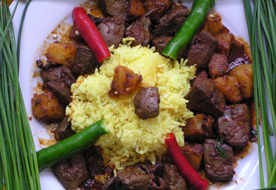
On the whole, drier dishes are the rule in a region with fresh water at a premium. Rajasthani eats epitomize this. Rice gives ways to rotis of millet, wheat or corn. Spicy gatta, cousin of the kadhi, accompanies the regional speciality of ker-sangri (desserts berries with beans). Experience daal-baati-churma – charcoal-baked dough balls with daal and sweetened wheat crumble. Game is a rare feast, with the famed lal maas, sunset-hues from a paste of red chillies.
In the Land of the Five Rivers, milk curds and paneer (cottage cheese) dishes abound. Punjabi foods feature uncomplicated combinations of herbs and the smoky aroma of a clay tandoor. Tandoori roti and butter chicken at roadside dhabas remain crowd-pleasers, but the piece de resistance in the winter special of sarson ka saag (pureed mustard greens) and makke di roti (cornflour flatbread).
In sharp contrast are the elaborate marinades and layered aromas of UP. There are many exquisite kebabs, each typical cut bathed in a different masala: galauti (melt-in-the mouth morsels created for a dentionally-challenged nawab), pasanda, shammi (mincemeat with gram), kakori, seekh…all accompanied by flaky-layered lachhedar paranthas, rumali (kerchief) rotis and naan. Dun pukht (sweated in dough-sealed handis) pulaos and vegetables are the norm in side dishes; creamy saffron-scented kormas the counterpoint. Subtly tempered daals each have their own specific tadka.
|