Indian CIOs pip global peers in IT innovation
Banglore / Mumbai, Source : The Economic Times
In a bid to improve road connectivity to places of tourist interest, the Minister for Road Transport and Highways Shri Kamal Nath has assured to provide Rs. 50 crore for development of such roads to state governments under the Central Road Fund.
India’s top enterprises, set to spend over $10 billion on technology services this year, are better than global peers when it comes to using technology for driving innovation and launching disruptive business models, according to an IBM study of over 2,500 companies across the globe. The chief information officers (CIO) at companies, such as Maruti Suzuki, Shoppers Stop, Reliance Life Insurance, Asian Paints, plan to use technology solutions for lowering their operational costs, and also explore newer ways of doing business.
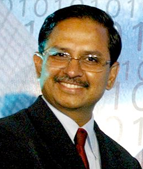
Shanker Annaswamy, managing director of IBM India |
“Indian CIOs appear to be more visionary when compared with their global counterparts, according to our study,” Shanker Annaswamy, managing director of IBM India, said. One of the significant findings of the ‘IBM’s Global CIO Study’ is the evolution of Indian IT leaders when it comes to their involvement in business. Almost 40% of the Indian CIOs report directly to their chief executive officers, while around 31% of their global peers report directly to their CEOs. This reflects their involvement with the businesses, something every technology leader aspires to achieve.
Moreover, 80% of the 100 top Indian CIOs surveyed said they plan to use data analytics and business intelligence (BI) tools to help their businesses become better. Analysing customer and sales data will help these companies track their customers better and sell relevant products and services. Top banks, such as HDFC and SBI, are using BI software for tracking customer behaviour, their spending and investment priorities and then sell relevant solutions, instead of wasting precious time and money on mass-marketing campaigns.
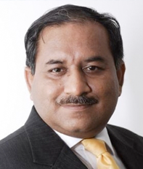
Arun Gupta,
CIO of Shoppers Stop |
“Even as we negotiated hard with vendors for doing more with less, our agenda for using more BI and data analytics remained unchanged,” said CIO of one of the top Indian banks. He requested anonymity as he is not authorised to speak with media. Meanwhile, retailers such as Shoppers Stop are already seeing benefits of software investments in tracking data. “We have a technology that focuses on stock replenishment, therefore, stocks are auto-replenished, making things faster and better as it was manually done earlier,” said Arun Gupta, CIO of Shoppers Stop. Mr Gupta, who bought new software for connecting all the stores and vendors, is seeing better efficiencies. “Merchandisers are now able to see what their inventory status is across all the Shoppers Stop stores. This helps in understanding which stock is moving faster and also which locations are selling what,” he said.
“We find Indian CIOs not only playing a visionary role, but also balancing their RoI agenda effectively,” added Mr Annaswamy. For instance, in a year when businesses had to cope with lower demand for products and services, Indian CIOs managed to stay on track with long-term IT investments without shelving crucial projects. “We had budgeted 10% less for IT spend this year compared to last year, but we will be spending 15% lesser and this is not because we have deferred IT spends, but because of cost savings due to price renegotiations,” said Mr Gupta. Many Indian telecom companies are also seeking to invest more in environment-friendly technologies, and are buying new solutions for lowering power consumption.
“There is a real business need for chasing the green agenda when it comes to telecom firms, especially because even 20% reduction in $5,000-$6,000 they spent every month on towers will be huge,” said Nipun Mehrotra, vice-president and general manager, IBM Global technology services. Meanwhile, private sector companies are not the only ones ahead of the technology curve. Public sector companies, such as Indian Oil Corporation (IOC), are gearing up with new technology investments to boost their business. “Last year, our budget was around Rs 20 crore, this year, it is more than Rs 30 crore. We are spending a lot on business intelligence, HR pay roll solutions and SAP,” said S Soni, executive director of IOC.
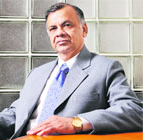
Vijay Mahajan,
Vice-president of IT at M&M
|
“For our petrochemical division, we are implementing CRM and sales management,” he added. Manufacturing companies, such as Mahindra&Mahindra, are now readying new technology investments in order to cope with more demand and also integrate different businesses. “We are spending on data centre and infrastructure projects and are also working to integrate the acquired businesses of Kinetic and Punjab Tractors,” Vijay Mahajan, vice-president of IT at M&M, said. His company will spend almost 0.8% of its annual revenues on IT, unchanged from last year. |
Michelin tyre plant to come up in Chennai
The largest tyre maker of the world, Michelin Group, will set up its first factory in the country in Chennai. The plant is another critical addition to the number of automobile companies that have set up base in the state of Tamil Nadu, mostly clustered around the state capital. The plant will come up at an investment of Rs. 40 billion and will become operational by 2012. It is expected to produce one million truck and bus radial tyres a year. So far, the company was importing tyres, mainly from China and Thailand, to cater to the Indian market. The proposed facility, spread over 290 acres, would be constructed at Thervoy Kandigai, near Chennai and will employ 1,500 workers from local communities, the company noted in a release.
“With the accelerating development of road and highways and the number of ongoing road development projects, India is on course to offer customers the opportunity to extract the full value from radial tyres. Therefore, we believe that India holds tremendous potential for the Michelin Group in terms of establishing a world class manufacturing facility,” said Prashant Prabhu, president (Africa-India-Middle East), Michelin, after signing a memorandum of understanding with the state government. The company has 68 production sites around the world spread across 19 countries. |
$700 mn loan okayed to boost infra projects
In a bid to accelerate infrastructure projects through Public-Private Partnership (PPP) initiatives in India, the Asian Development Bank (ADB) has decided to provide close to $700 million in loans. ADB’s board of directors on November 17 approved the multi- tranche loan for the second India infrastructure project financing facility. The loan will be released over a fiveyear period to the state-owned India Infrastructure Finance Company Ltd (IIFCL), and is follow-on of the firststage facility of $500 million, approved in 2007. IIFCL, established in 1996 to promote PPPs, will use the facility to support investments in a broad range of PPP infrastructure projects. “The first-stage facility has proven to be effective in facilitating PPP infrastructure,” said Cheolsu Kim, principal financial sector specialist in ADB’s South Asia department.
“ADB is committed to assisting India in promoting PPP projects, especially in the transport and power sectors, since infrastructure investments lead to higher farm and nonfarm productivity, increases employment opportunities and incomes, and reduces poverty,” he said. Expanding the infrastructure in the face of a rapidly growing population, fiscal constraints, and the recent global financial crisis, was a major task in gaining support of the private sector. Although the government has carried out broad financial sector reforms to create a market environment for longterm and innovative financing required for projects, products and the market, the appetite from private sector investors for long-term finance for infrastructure was still limited. The multi-tranche loan will provide funds on commercial terms with more than 20-year maturities, which are not currently available in the domestic market. The facility is expected to enhance the availability of long-term funds for infrastructure and boost investor confidence when confidence is low. As of August 2009, IIFCL had received 192 PPP sub-project proposals, of which it has identified 107 eligible cases. The new loan will help India meet its infrastructure investment target of $514 billion under its current 11th Five Year Plan, and continue support for the government’s effort to move forward the infrastructure agenda. Loan amount under the latest facility will be released in three tranches, with $210 million in the first, $250 million in the second, and $240 million in the third.
|
|
FDI to bridge current account deficit: PM

Inviting American companies to invest in India’s infrastructure and defence industries through the public-private-partnership route, Prime Minister Manmohan Singh said India would bridge a higher current account deficit through increased Foreign Direct Investment (FDI). Addressing the US-India Business Council (USIBC) in Washington D.C., on November 23, the Prime Minister said: “A strategy of high investment in the face of modest export growth may require to run somewhat larger current account deficits than we otherwise would. This raises the issue of whether we can finance the current account deficits with long term capital flows. I believe we can.
“India’s current account deficit is around 1 percent of GDP. It may need to ncrease to 2.5 percent of GDP to finance the enhanced infrastructure investment strategy I havein mind. This is not too large a deficit to finance through additional long term flows, including foreign investment. Indeed, with the industrialized world projected to grow more slowly, capital will need to look for profitable opportunities abroad to earn a high rate of return. A fast growing India will provide precisely that opportunity. ” The Prime Minister assured his high profile CEO audience that India would push ahead on key reforms in several areas, “especially those aimed at bringing the deficit under control while ensuring a strong expansion in investment in infrastructure”. |
India may net $50 b foreign investments this fiscal
Net capital inflows into India during the current fiscal will be about $50 billion, Dr C. Rangarajan, Chairman of the Prime Minister's Economic Advisory Council (PMEAC), has said. Capital flows cover portfolio inflows from foreign institutional investors (FIIs), foreign direct investments and external commercial borrowing (ECBs). The Council had earlier estimated net capital inflows of $55 billion. In 2008-09, there was a net capit
al outflow from the economy. "Capital flows have started picking up. Perhaps, in the second half, one would see a larger pick-up. So far the gross inflows have been $44 billion, but we have to account for ECB repayments and outward FDI also. The total net capital inflows could be $50 billion this year," Dr Rangarajan told reporters on the sidelines of an OECD-India symposium co-hosted by the Organisation for Economic Cooperation and Development and ICRIER here today. In his address to the symposium, Dr Rangarajan said that this increased level of capital flow was manageable and would not pose problems for the monetary authorities. However, in her presentation, Ms Usha Thorat, Deputy Governor of the Reserve Bank of India, said that managing the capital flow is going to be a challenge in the coming days.
Volatile FIIs: Noting that FII inflows have been the volatile element, Ms Thorat said that in the current year so far (up to November 20) $19 billion had come in FII through this route. In 2008-09, the net FII outflow was about $15 billion. Inward FDI so far this fiscal stood at $17.7 billion. It was $35 billion last fiscal, she said. "Managing capital flows is an important issue as large capital flows and asset prices could feed on each other and this could be destabilising," Ms Thorat said.
7 Per Cent: Growth Dr Rangarajan said that the economy will grow by about 7 per cent in the current fiscal. For 2010-11, the Council's forecast is 7-8 per cent. India will return to 9 per cent GDP growth levels in 2011-12 only if the world economy and world trade improve. For the current fiscal, Dr Rangarajan said that the current account deficit will be about 2 per cent of GDP, that is, about $25 billion. This current account deficit will be easily financed by the net capital inflows. "After allowing current account deficit of $25 billion, we had estimated accumulation of $30 billion reserves. Looking at what has happened to the accumulation of reserves in the first nine months, it appears that our estimate was more or less correct. It could be somewhat less than $30 billion. This is manageable level of capital flows. This can be managed," Dr Rangarajan said. |
Goa in list of Top 10 regions to visit in 2010
Goa has been listed as one of the Top 10 regions to visit in Lonely Planet’s travel guide for 2010. ‘Best in Travel 2010’, is Lonely Planet’s fifth annual list of the best places to go and best things to do in the year ahead. The Top 10 regions are the Alsace in France, Bali in Indonesia, Fernando de Noronha in Brazil, Goa in India, the Koh Kong Conservation Corridor in Cambodia, Lake Baikal in Russia, Oaxaca in Mexico, Southern Africa, the Lake District in England, and the South-West part of Western Australia. |
|