 |
|
The Right to Education now a Fundamental Right
MORE
[+] |
 |
|
Foreign Education Bill finally gets Cabinet nod
MORE
[+] |
 |
|
Budget steps to put eco back on 9% growth track
MORE [+] |
|
| |
|
| |
| India to overtake China in growth by 2018 |
| source : EIU |
 NEW DELHI:
India will overtake China to become world's fastest growing economy by 2018, said the Economist Intelligence Unit (EIU), the research arm of London-based Economist magazine. Because of the favourable demography — higher percentage of working population — India's growth rate will continue to remain on the higher side, said Anjalika Bardalai, senior analyst at EIU. At present, China is the fastest growing economy in the world. NEW DELHI:
India will overtake China to become world's fastest growing economy by 2018, said the Economist Intelligence Unit (EIU), the research arm of London-based Economist magazine. Because of the favourable demography — higher percentage of working population — India's growth rate will continue to remain on the higher side, said Anjalika Bardalai, senior analyst at EIU. At present, China is the fastest growing economy in the world.
Bardalai said considering strong fundamentals, "our long range forecast suggests that India will sustain an average annual growth rate of 6.4% to 2030." India will take the lead not because of its growth rate is likely to attain double-digit level but China's growth rate will moderate with development of its economy, she added.
However, for the current financial year, Bardalai said Indian economy would grow at 6.8% only. But, this is not comparable with figure of 7.2% projected by the government as EIU has adopted a different methodology to calculate the rate. "Our projection is based on expenditure in economy and is not on factor cost as done by the Indian government," she explained. She said the growth rate will pick up to 7.7% in 2010-11 and 8% in 2011-12. "Continued domestic consumption, spurred by rising income and a growing middle class, will be primary drivers behind India's growth. At the same time, high savings and investments will help India achieve the higher growth rate."
According to EIU, inflow of investments through foreign institutional investors (FIIs) will touch $75 billion by 2014, which is currently hovering at around $36 billion. EIU felt that the biggest hurdle to achieve higher growth is the high inflation and infrastructural bottleneck. As the inflation has already risen close to 10% in February, the monetary pressure is likely to increase.
|
|
| India becomes first country to set up environment court |
India announced the setting up of National Green Tribunal (NGT), with a network of specialised environment courts, and National Environment Protection Authority (NEPA), making it the first country in the world to have extensive network of specialised environment courts. Mr. Jairam Ramesh, Minister for Environment and Forest stated that NGT will give the Indian citizen judicial remedy so far as environmental damages are concerned.
NEPA would have the mandate to ensure that the standards and stipulations under which environmental approvals are granted are actually adhered to.
The Central Pollution Control Board and the State Pollution Control Boards will work under NEPA and it is envisaged that all the licensing functions of the Ministry would be transferred to this authority shortly. The proposed system envisages NEPA carrying out the monitoring and compliance of standards and statutes and the NGT settling disputes.
|
| India to be world’s second largest Steelmaker by 2012 |
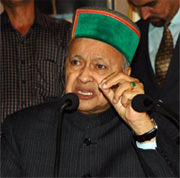 India will become the world’s second largest steel producer by 2012, more than doubling its capacity of 57 million tons as part of the push being given to assist infrastructure development, Steel Minister Virbhadra Singh has said. “I have set a target of 124 million tons by 2012. Yes, we will become the world’s second largest steel producer. But, more importantly, India has a vast capacity to consume that kind of output. It is necessary for our infrastructure development,” the Minister added.
“Here, I am only talking about the capacity expansion of existing steel companies. If I also take Greenfield projects into account, we have expression of interest for projects worth over
$80 billion,” Singh said.
At present, China is the largest steel maker in the world with a capacity of
over 600 million tons, followed by Japan and South Korea. India ranks fourth. A five-term Chief Minister of Himachal Pradesh, Singh said that the state-run Steel Authority of India (SAIL) alone has targeted to virtually double its capacity to nearly 30 million tons. “These expansion projects will sail through. Both at Bokaro and Bhilai, the company has enough land to take up the projects,” said Singh. The Minister said that SAIL would go for a public issue and partial divestment of equity during the early part of the next fiscal and a decision had already been taken in this regard.
Singh said that he was keen that some large projects of global companies also go on stream soon, including the $12-billion integrated steel unit of South Korea’s Posco in Orissa, and two similar Arcelor-Mittal units in Orissa and Chhattisgarh.
|
|
Repo and Reverse Repo rates hiked

NEW DELHI:
Reserve Bank of India (RBI) increased the two key policy rates - Repo and Reverse Repo by 25 basis points on 19 March.
This increase, which was brought into immediate effect, had the effect of taking the repo rate (the rate at which banks borrow funds from RBI) and the reverse repo rate (the rate charged by RBI for maintaining the funds parked by banks) to 5% and 3.5% respectively.
This move by RBI, which came a month ahead of its annual monetary policy statement due on 20 April, has been triggered by the inflation rate edging closer to double digits.
RBI had, in its quarterly review, predicted that inflation would touch 8.5% by end March. However, the spike in inflation figures which touched 9.9% in February prompted RBI to act quickly to contain the galloping prices.
RBI expects that since there is adequate liquidity in the banking system, credit expansion for sustaining the recovery from the global financial crisis induced recession would not be affected.
It is expected that banks would wait till the annual monetary announcement policy of RBI before taking any decision for increasing the retail borrowing and lending rates.
|
|
|
| India Inc's M&As touch $19bn in 2010 |
| source : The Times Of India |
 New Delhi: Driven by Bharti Airtel’s $10.7-billion takeover deal for the African assets of Kuwait’s Zain Telecom, the total value of merger and acquisition (M&A) deals in the country in the first quarter of 2010 has nearly quadrupled to $19 billion. New Delhi: Driven by Bharti Airtel’s $10.7-billion takeover deal for the African assets of Kuwait’s Zain Telecom, the total value of merger and acquisition (M&A) deals in the country in the first quarter of 2010 has nearly quadrupled to $19 billion.
According to VCCEdge, the financial research platform of VCCircle, the value of M&A deals in India rose to $19.2 billion in the first quarter of this year, up from $5.2 billion a year ago.
The number of domestic transactions doubled from 39 deals worth $2.2 billion in Q1 of 2009 to 80 deals worth $4 billion in the same period of this year, VCCEdge said. Further, there were 51 outbound deals in the period under consideration, while the figure stood at 24 a year ago. In terms of value, the increase was more than seven times, primarily due to the Bharti Zain deal.
The number of inbound deals also rose to 29 in first three months of 2010 from 24 deals in the same period of 2009. Going forward, the value and volume of Indian M&A activity is likely to increase as investor confidence and liquidity returns to the market.
|
|
|
|


