Darjeeling "GI Protection"
COUNTRY REGULATIONS
DARJEELING TEA – THE BEST
The quality, reputation and characteristics of Darjeeling tea are essentially attributable to its geographical origin It possesses a flavour and quality which sets it apart from other teas, giving it the stature of a fine vintage wine. As a result it has won the patronage and recognition of discerning consumers worldwide for more than a century. Any member of the trade or public in ordering or purchasing Darjeeling tea will expect the tea to be the tea cultivated, grown and produced in the defined region of the District of Darjeeling and to have the special characteristics associated with such tea. Consequently, Darjeeling tea that is worthy of its name cannot be grown or manufactured anywhere else in the world. Darjeeling tea cannot be replicated anywhere. It is this equity that is sought to be protected by the Tea Board and the Ministry of Commerce under the norms of the TRIPS Agreement of the WTO.As champagne cannot be manufactured in any place other than the Champagne District of France (even though the grapes used are the same kind) but has to be referred to as sparkling wine, in the same manner only tea grown and produced in the defined area of the Darjeeling District in State of West Bengal, India can be called DARJEELING tea. Any tea grown in any other region from the same sort of tea plants cannot be called Darjeeling tea. Darjeeling tea, a rare coveted brew which is desired globally, but is only grown in INDIA.
Darjeeling- A Paradise :
In the northeast Indian region of Darjeeling, women tea pluckers make their way up the steep mountain paths every day at dawn towards the 87 fabled gardens that have been producing the highly prized black teas for over 150 years. Located on grand estates some perched at altitudes of over 5,000 mts. the gardens are in fact plantations that, at times, stretch over hundreds of acres. But, they are still 'gardens', because all tea grown here bears the individual name of the garden in which it is grown.
First planted in early 19th century, the incomparable quality of Darjeeling teas is the result of unique and complex combination of agro-climatic conditions prevailing in the region, altitude, meticulous manufacture and disdain for quantity. The climate of Darjeeling is perfect for tea cultivation. Tea requires at least 50 inches of rainfall annually. Alternate spells of rain and sunshine are considered good for the crop. Also, the fog helps in maintaining the required level of moisture. The tea bush grows at a height of 700 to 7000 metres above sea level, so it has all the space that it needs to grow.
Why is the location such a hallmark?
There are both scientific as well as popular religious beliefs behind why Darjeeling is the most suitable place to grow tea. The local people believe that the Himalayan range is the abode of Shanker Mahadeva and the breath of God brings winds that cool the brow of the sun filled valley, and the mist and fog which provide the moisture. The fountain that flows from the piled hair of Shiva provides water for the crop and it thrives. The diversity of Darjeeling tea is further accentuated by differences in wind and rainfall that depend on the altitude and exposure of the slopes under cultivation.
The quality, reputation and characteristics of Darjeeling tea are essentially attributable to its geographical origin. It possesses a flavour and quality which sets it apart from other teas, giving it the stature of a fine vintage wine. As a result it has won the patronage and recognition of discerning consumers worldwide for more than a century. Any member of the trade or public when ordering or purchasing Darjeeling tea will expect the tea to be the tea cultivated, grown and produced in the defined region of the District of Darjeeling and to have the special characteristics associated with such tea.
Consequently, Darjeeling tea that is worthy of its name cannot be grown or manufactured anywhere else in the world.
Darjeeling tea cannot be replicated anywhere.
DARJEELING TEA – a Geographical Indication :
Under international law, geographical indications mean indications which identify a product as originating in the territory of a member, or a region or locality in that territory, where a given quality, reputation or other characteristic of the product is essentially attributable to its geographical origin.
Darjeeling tea is India’s treasured Geographical Indication and forms a very important part of India’s cultural and collective intellectual heritage. It is of considerable importance to the economy of India because of the international reputation and consumer recognition enjoyed by it.
In the legal sphere, countries are seeking to protect Geographical Indications as geographical indications, collective marks or certification marks.
 Darjeeling Tea. As exotic and mysterious as the hills themselves. A tradition steeped in history and a mystique that is felt in every sip. Walk into the cloudy mountains and feel light hearted.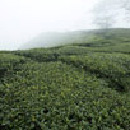
 It is believed that the Himalayan range is the abode of the deity Shanker Mahadeva, and it is the breath of God that brings the winds that cool the brow of the sun-filled valley, and the mist and fog which provide the unique quality. Darjeeling was born, they say, as a thunderbolt from the sceptre of Indra.
 The earth sings for you in Darjeeling. The women pluckers smile and, with the radiance of their joy, the sun rises over the gardens. Behind them, set against the rosy dawn sky, loom the snows of Kanchenjunga.
 The sun traces its path across the heavens leisurely. Stars that are unreachable suddenly seem ready to be touched. The hum of nocturnal life which characterises the mountains sings a melody that has to be felt rather than heard. A cool rustling breeze dances across the land. The earth is as majestic as the tea that is born there.
 It’s an idyllic existence close to nature’s heartbeat. That’s what makes this tea so unique. The tea pluckers sing of the tiny saplings which bend in the wind as they work. A melody of greenness surrounded by blue skies and the sparkle of the mountain dews. And tied to the circle of life, the tea bushes sustain themselves day in day out, season after season, through the years. Life on a plantation is a completely natural, refreshing state of being.
 All teas produced in the tea growing areas of India, including Darjeeling, are administered by the Tea Board, India under the Tea Act, 1953. Since its establishment, the Tea Board has had sole control over the growing and exporting of Darjeeling Tea and it is this which has given rise to the reputation enjoyed by Darjeeling Tea. The Tea Board has been engaged in the protection and preservation of this treasured icon of India’s cultural heritage as a Geographical Indication on a worldwide basis.
 •The Trade Marks Act 1999 DARJEELING word and logo are registered certification marks of Tea Board;
  Section 24.9 of the TRIPS (Trade Related Intellectual Property Rights) states that no foreign jurisdiction is obliged to safeguard any Geographical Indication if the same has not been properly protected and enforced in the home country. With this principle in mind, an online system to monitor the supply chain system of the Darjeeling Tea has been introduced lately. A Kolkata based software firm, with prior experience in the Tea Trade has been appointed to develop, monitor and maintain a software system where the entire trade chain can be tracked down, right from the Tea gardens to the final shelves where the premium Darjeeling Teas are kept before reaching the Tea Connoisseurs across the world. This system will be extended to the ground level checking as well. To this effect, a renowned international agency has been appointed to conduct onsite checks on quality and homogeneity of the teas packed based on organoleptic parameters as well as the packaging and proper and optimum use of the logo and mark. This is undoubtedly a giant leap towards enforcements of rights and reputation across the globe.
 The certification scheme put in place by the Tea Board covers all stages from the production level to the export stage and meets the dual objective of ensuring that (1) tea sold as Darjeeling Tea in India and worldwide is genuine Darjeeling Tea produced in the defined regions of the District of Darjeeling and meets the criteria laid down by the Tea Board and (2) all sellers of genuine Darjeeling Tea are duly licensed. This licensing program affords the Tea Board the necessary information and control over the Darjeeling Tea industry to ensure that tea sold under the certification marks adheres to the standards for DARJEELING Tea as set forth by the Tea Board.
  Fill the kettle or teapot with freshly drawn cold water (it must contain oxygen in order to bring out the full flavour of the tea). We recommend using fresh water because the quality of your water will directly affect the taste of your tea. When the water is near boiling point, pour a little into the teapot, swirl around, and tip away. This leaves a hot, clean teapot.
 Pour the water onto the leaves or tea bags. This saturates the tea allowing the flavour to release naturally. Do not pour the water and then add the tea, this will only result in a poor cup of tea.
 Seasons are the dance of Darjeeling Tea. The dance begins in spring, waltzes through the summer and ends in autumn. That is the rhythm of the year on the gardens.